




Frozen about 3 days before measurement
12 of 1,000 Paths, or 1.2%, no longer matched the definition we had frozen.
Buyer Path Research
We walked 1,000 public high-intent B2B buyer Paths from the outside. How they are built, how much sits behind the visible CTA, where they fail, and how fast a correct definition goes stale.
Public observation only. Nothing was submitted, booked, or created on any site.
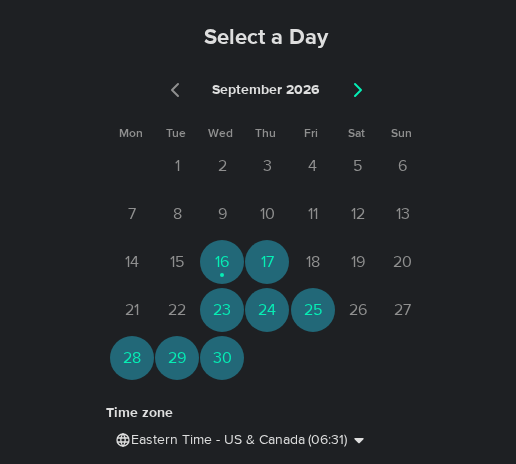
14 of the 1,000 Paths led to a dead, invalid, or unpublished booking or intake destination.
One square per measured Path. See the failure evidence.
What we found
A generalizing execution system produced this dataset, not a hand-built corpus: 364 of 451 unseen Paths were credibly evaluated with no site-specific setup. Execution evidence.
Finding one
569 of 1,000 Paths reached a form. In the sales-led comparison set, 179 of 218 did, and those forms ran longer.
Broad sample n = 569 forms reached · Comparison set n = 179 forms reached
| Controls | Distribution | Broad sample | Comparison |
|---|---|---|---|
| 1 to 5 controls | 34.3%195 of 569 | 30.7%55 of 179 | |
| 6 to 10 controls | 33.9%193 of 569 | 29.1%52 of 179 | |
| 11 to 14 controls | 14.1%80 of 569 | 14.5%26 of 179 | |
| 15 or more controls | 17.8%101 of 569 | 25.7%46 of 179 |
Broad sample, n = 569 Comparison set, n = 179 Bars scaled to a 0 to 40% axis
| Form shape | Broad samplen = 569 | Comparisonn = 179 |
|---|---|---|
| Median controls | 7 | 8 |
| 75th percentile | 12 | 15 |
| 90th percentile | 17 | 18 |
| Revealed fields progressively | 44.1%251 of 569 | 58.7%105 of 179 |
96 of 101
forms with 15 or more observed controls revealed fields progressively. That is 95.0%.
Controls are counted across reveal passes, so this is partly definitional. Safe reading: long forms were rarely visible all at once.
A visible CTA often fronts a deeper qualification interaction that only appears once execution begins. Static inspection understates it.
Nothing here says long forms convert worse or that progressive reveal is a defect. The Study measured structure, not outcomes.
Finding two
High-intent Paths routinely cross page, popup, embed, and vendor boundaries before a buyer can say anything.
The furthest buyer-visible intake surface reached.
The form grows while the buyer fills it in.
The only shape a single page check covers.
Renders inside the page, served cross-origin by a booking vendor.
The buyer leaves the tab. Nothing on the original page records what happens next.
The intake form belongs to a third party, inside the company page.
The remaining 70 of 842 split across hosted vendor booking pages and popups to a form. Shapes are mutually exclusive and cover all 842.
A Path counts as third-party dependent if any one of four things held. The observed destination was on a host outside the company's own domain. The intake form itself was vendor-hosted. The scheduler surface was a cross-origin embed. Or the scheduler was a hosted vendor booking page. A Path counts once even if several applied.
Of the 190 destinations that sat outside the company's own domain, 184 were on a recognizable scheduling or form vendor and 6 were on other non-brand hosts.
The denominator is the 842 Paths that reached a buyer-visible intake surface, not all 1,000. Paths that never reached an intake surface cannot be classified this way.
Every handoff adds a state a page check cannot verify. The Path is only correct if all of them are.
Nothing here says third-party tools are bad or reduce conversion. The finding is dependency, not quality.
Finding three
Every square is one frozen buyer Path. Squares are placed in sample order.
14of 1,000
At the observation point, 14 of 1,000 frozen buyer Paths led to a dead, invalid, or unpublished booking or intake destination.
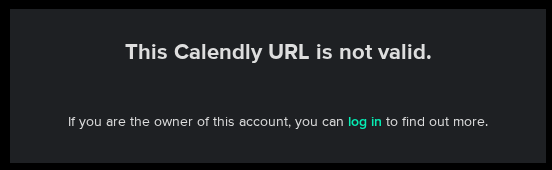
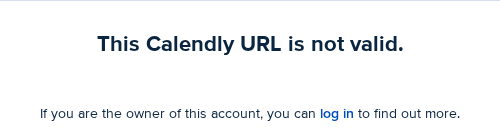
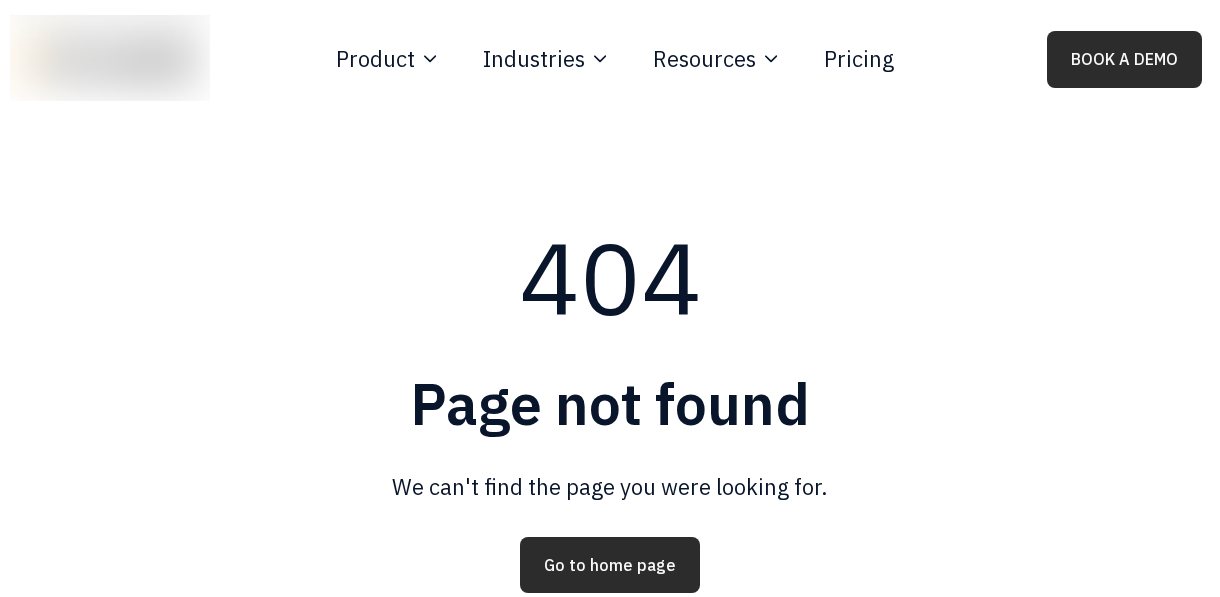
The buyer followed the company's own CTA and arrived at a vendor error page, an unpublished calendar, or a missing route. Rare, and invisible from inside: nothing records a buyer who never reached a form.
These were not optimization suggestions. The destination itself was unavailable to the outside buyer.
The runner claimed 6 of the 14 on its own. The other 8 were confirmed from stored evidence during adjudication. A market observation, not a detection claim.
Broad sample, adjudicatedWhat qualified: the CTA destination rendered a vendor error state, an unpublished or missing booking page, or a not-found document. Nothing bookable, and no intake form. Company names are withheld.
| Destination surface | What the buyer saw | How it was established |
|---|---|---|
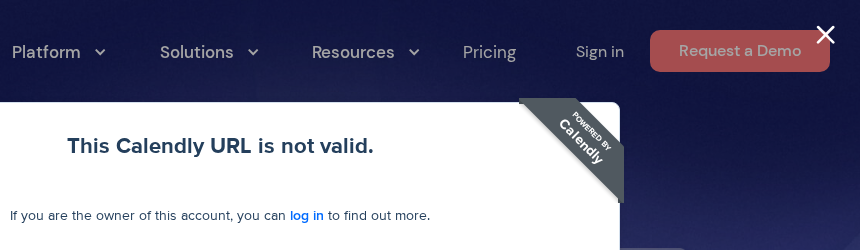
| Calendly, hosted booking page | “This Calendly URL is not valid.” | Claimed by the runner |
| Calendly, hosted booking page via popup | “This Calendly URL is not valid.” | Claimed by the runner |
| Calendly, hosted booking page via popup | Invalid-URL error page, no calendar rendered | Claimed by the runner |
| Calendly, hosted booking page | “URL is invalid” | Claimed by the runner |
| Calendly, hosted booking page | “URL is not valid” | Claimed by the runner |
| Calendly, hosted booking page via popup | “URL is invalid” | Claimed by the runner |
| Calendly, embedded frame on a live page | “This Calendly URL is not valid.” inside the embed | Confirmed in adjudication |
| Google Calendar appointment schedule | “Appointment not found” | Confirmed in adjudication |
| Google Calendar appointment schedule via popup | “Appointment not found” | Confirmed in adjudication |
| Cal.com team page via popup | “No links set up”, no booking widget | Confirmed in adjudication |
| Cal.com team page | Unpublished-team status message, no scheduler | Confirmed in adjudication |
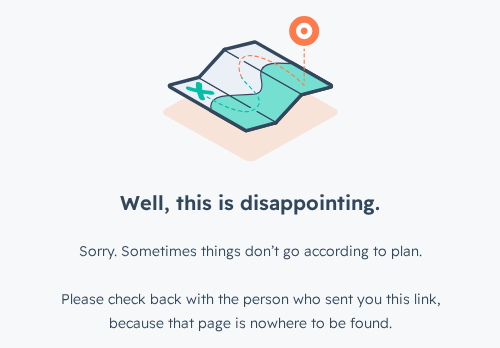
| HubSpot Meetings on a brand-hosted domain | Not-found page, no scheduler, no form | Confirmed in adjudication |
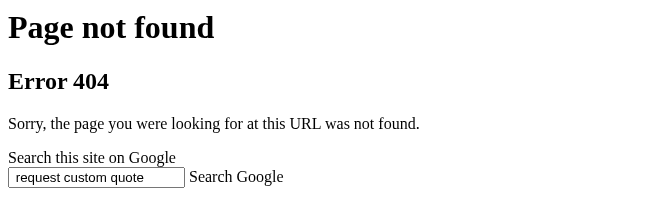
| Vendor form destination via popup | 404 not-found page | Confirmed in adjudication |
| First-party booking route, redirected | 404 error page, no form or scheduler | Confirmed in adjudication |
One measurement pass. It says what an outside buyer would have hit at that moment, not how long the destination had been dead.
No lead loss, revenue loss, routing or CRM failure. A buyer-visible dead destination at one point in time, nothing beyond that.
Finding four
We recorded each definition at screening, then walked it. Two separately aged sets, never pooled.
12 of 1,000 Paths, or 1.2%, no longer matched the definition we had frozen.
8 of 163 older Path definitions, or 4.9%, no longer matched.
Change classes were coded from the stored adjudication notes. The two tracks are never combined.
A correct Path definition is dated evidence. Its shelf life is shorter than most teams assume.
History is the product, not the reassurance: what changed, when the Path last worked, and whether the fix restored it.
This is not an annual mutation rate. These are cross-sectional observations of differently aged definitions. A real rate needs repeated observation of the same Paths.
Execution
~4 in 5
364 of 451 · 80.7%
Paths the frozen runner had never executed before. Credibly evaluated from the entry page and the CTA alone, with no per-site scripting.
A fresh holdout of 50 unseen companies on the current runner agrees: 40 of 50 evaluable, 46 of 50 trustworthy with no false claim.
Evaluability is the share of Paths that produced a credible evaluation. It is not accuracy, not a pass rate, and not a coverage ceiling for customer Paths. It does not mean one Path in five is unsupported.
Give BookedDemo any public high-intent B2B sales Path. We verify it from the outside and show how far the buyer got, and where proof stops.
In scope: demo request, contact sales, request a quote, and trial entry.
Some evidence cannot be captured from outside. The run returns the deepest honest result and names the boundary.
None of these is a site BookedDemo cannot handle.
Path Market Context · research preview
One observation gets more useful placed against patterns seen across other public buyer Paths.
All 569 forms reached in the broad sample. The marker is a worked example, not a customer.
An 18-control contact-sales form sits above the 90th percentile: 523 of the 569 observed forms asked for 18 or fewer.
Unusual does not mean wrong. It tells you where to investigate.
Every Path BookedDemo executes adds to that frame. A one-off audit cannot provide it.
A research preview, not a product feature. No grade, no score, no best-practice claim. BookedDemo does not ship interactive benchmarking today.
Why this matters
We use published work to explain why the structure above matters, never to estimate anything about our own sample.
These are e-commerce and general web studies. The mechanisms transfer. The numbers do not.
Method
One frozen runner build walked all 1,218 Paths. Raw evidence was checksummed before interpretation, every Path was adjudicated from that frozen record, and the two sets are never pooled.
| Property | Broad sample | Comparison set |
|---|---|---|
| Companies | 1,000 | 218 |
| Where they came from | A deterministic walk over a broad B2B software frame, then screened for a live public high-intent Path. | Carried forward from earlier BookedDemo research and product-validation work, then measured the same way. |
| Reached a buyer intake form | 569 of 1,000 · 56.9% | 179 of 218 · 82.1% |
| Showed a scheduler surface | 277 of 1,000 · 27.7% | 4 of 218 · 1.8% |
| Read it as | Skewed toward young, YC-adjacent companies. It describes the B2B software frame we walked. It is not a census of B2B SaaS and not a representative estimate of the whole market. | Selected rather than sampled, so it supports comparison only. It is not a representative sample of any segment, and prevalence is never quoted from it. |
All 1,218 Paths were walked by the same frozen runner build in one observation regime. Nothing was submitted, booked, or created: zero submit clicks were recorded.
Raw evidence was checksummed before interpretation. Every row was adjudicated into one of three buckets: a credible evaluation, an honest boundary or inconclusive result, or a gap. Rows the stored trail could not decide were re-checked by a human operator.
Evaluable means the run produced a credible evaluation. Trustworthy means it produced no false claim, including runs that correctly stopped at a boundary. Neither is accuracy.
Observation window. Every number describes one measurement pass. It is dated evidence about a public surface, not a permanent property of a company. Full boundaries.
Boundaries
What we could not observe, we do not claim.
What this means
A buyer Path is a changing chain of externally observable states across pages, popups, embeds, and vendors. Any link can go quiet without anyone inside noticing.
What was true once, on one day, in one context.
Not reassurance that everything is fine. A maintained proof record for the Paths that carry your highest-intent buyers.
A Proof Sweep does the same work on up to three of your own high-intent Paths, with kept evidence and a shareable Run Report.
Prefer to talk first? Discuss your Paths. The fit and scoping conversation is free.